

[ad_1]
Linda (Getch) Dawson ’71 grew up during the height of the space race between the USA and the USSR. He remembers going to an observatory with his family to hear the beeping as the Soviet satellite passed overhead Sputnik. “It’s funny that your path takes different turns, but I always went back to that first love: aviation,” she says. Dawson’s path took her from MIT to NASA, then a second career as a teacher and writer, earning her the nickname “Rocket Woman” by her colleagues and journalists.
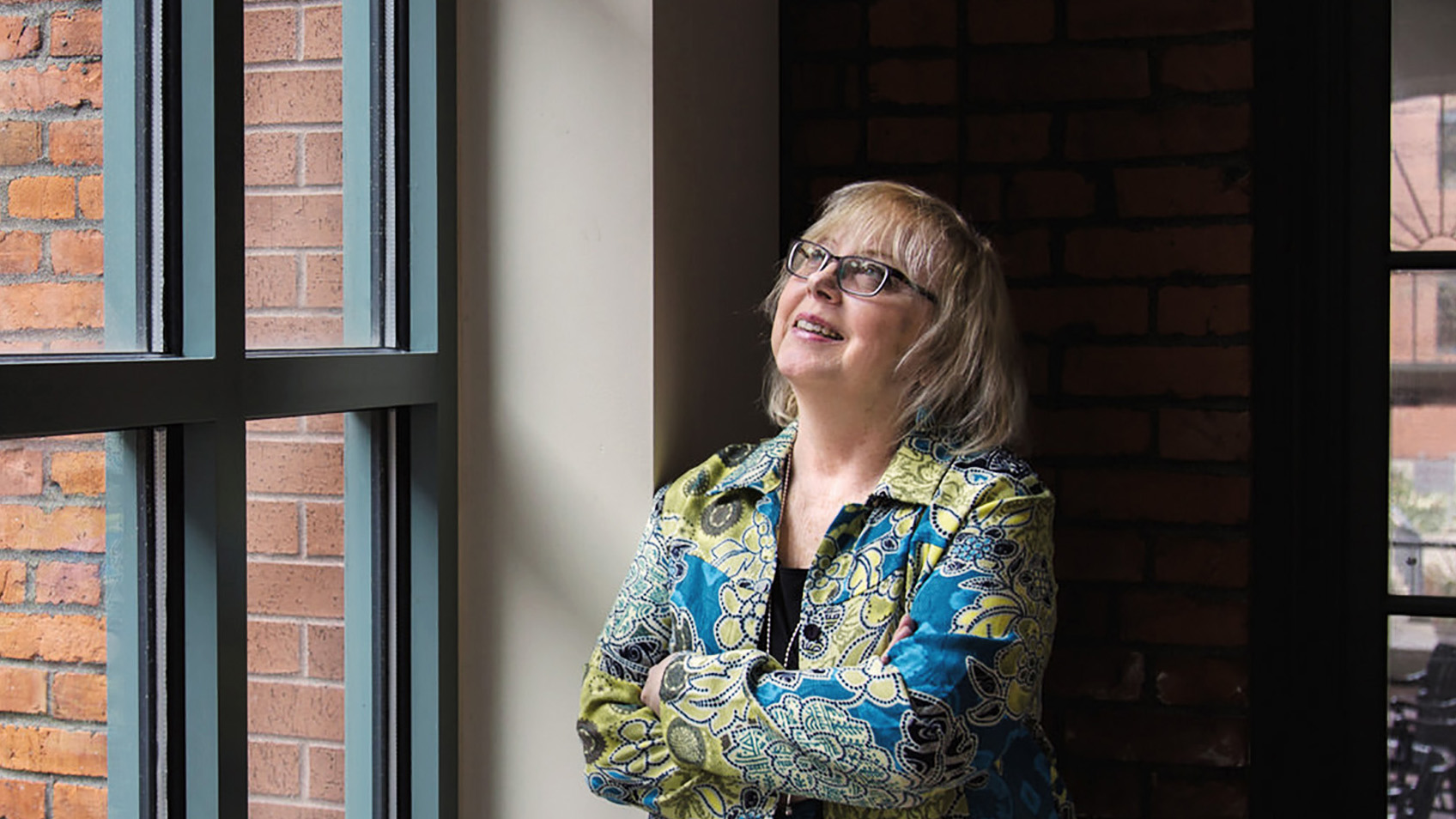
UNIVERSITY OF WASHINGTON, TACOMA
Dawson says her “most exciting job ever” in aviation is working as an aerodynamic flight controller at NASA’s Johnson Space Center in Houston. It was the late ’70s, and the navigation and guidance mission control group was responsible for ensuring the space shuttle’s safe re-entry into the atmosphere. He ran “endless simulations with astronauts and pilots” to determine how much fuel was needed for the first flight, taking into account the most critical failures. He was on mission control during launch and re-entry and ran more simulations to define and redefine the shuttle’s flight rules as conditions changed. “When flying at supersonic and hypersonic speeds, everything happens so fast that you can’t afford to look at a book to see what to do if something goes wrong,” he says. He left NASA long before the Challenger and Columbia disasters showed how dangerous human spaceflight could be – but years later he would share his perspective on these tragedies in his first book.
After a stint at NASA and Boeing Aerospace, Dawson spent more than 20 years as a senior lecturer at the University of Washington, Tacoma, where she designed courses on women in science and the history and science of space exploration. However, he says, “I couldn’t find anything reasonable.” [space] It was a book that satisfied what I thought needed to be summed up—it was either very technical or a children’s book.” So Dawson decided to write his own. Policies and Dangers of Space Exploration (Springer, 2017, second edition to be released this year) and War in Space (Springer, 2018) chronicles the history of the space program and explores the complex politics of modern-day space exploration as different companies and countries compete for access and resources.
Retiring from teaching, Dawson continues to write and teach at the Museum of Flight in Seattle, where she has volunteered for a long time. “There is still a whole new generation of young people at the museum who want to take rocket classes and learn about space,” he says. “It’s exciting to see that.”
[ad_2]
Source link