

[ad_1]
A survey of 357 business executives worldwide by MIT Technology Review Insights and Amazon Web Services shows that organizations of all sizes and industries understand how important it is to be data-driven. Most importantly, they learned that a supportive and successful data strategy cannot be left to chance.
Data value is front and center
The past year and a half has been devastating for businesses across industries, largely due to the pandemic. The initial shutdowns in March 2020 meant that many companies had to turn a dime to set up an entirely remote workforce, while also keeping up with wild shifts in consumer behavior and market demand.
The good news is that even during an unprecedented crisis, many organizations continued to grow. In fact, nearly half (45%) of respondents describe their company as “thriving”, saying they’ve increased business growth over the past 18 months.
But unsurprisingly, after such a tough time, many other organizations could do little more than hold on or hold on: The remaining 55% of respondents managed to keep up their efforts, run their usual business levels, or simply didn’t. t close.
Yet, whether organizations are thriving, surviving or simply surviving, there’s no doubt that the power of data is paramount to any business that wants to be successful. In today’s digital world, companies collect or access vast amounts of data. With technologies like cloud computing, analytics and artificial intelligence (AI), they can store, process, analyze and use this wealth of data to meaningfully use to drive business results.
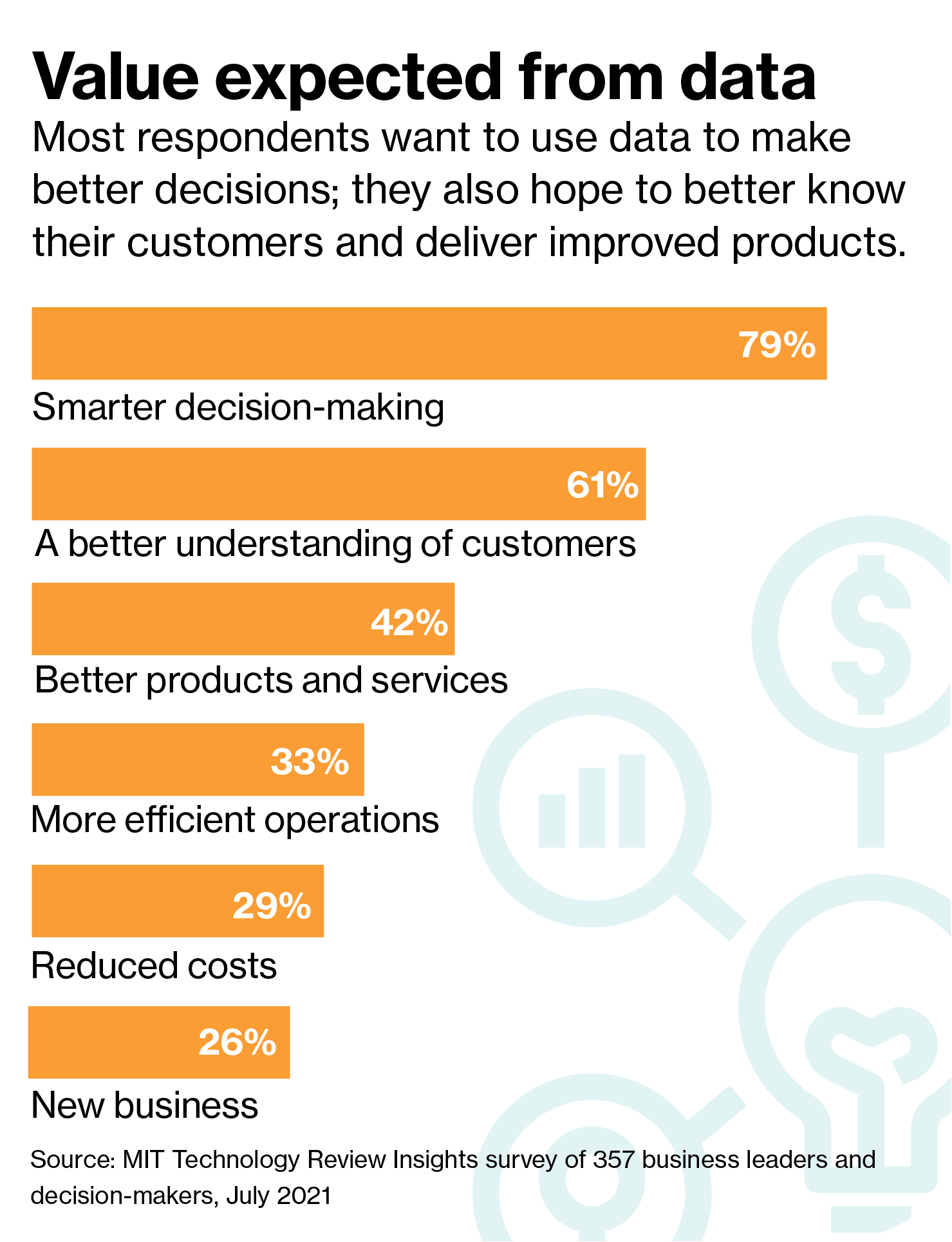
As a result, there are many possibilities for extracting business value from large datasets. According to the survey, the most common value companies hope to capitalize on is smarter decision making (79%). They also want to understand their customers and industry trends more deeply (61%), offer better services and products (42%), and implement more efficient internal operations (33%).
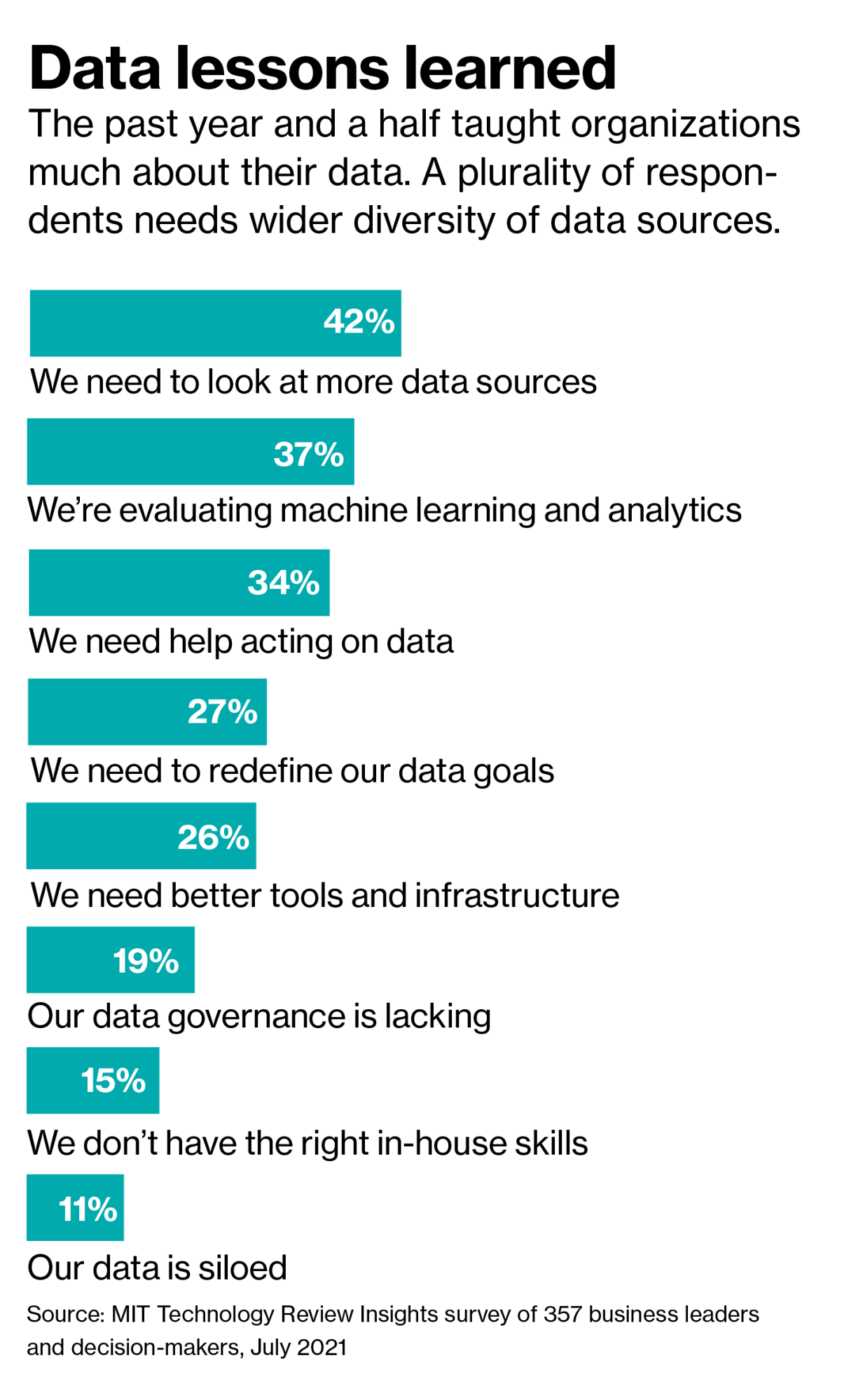
Companies have also learned valuable lessons about the importance of data as they struggle to stay competitive during the pandemic. For example, nearly four in 10 respondents report needing to look at more data sources, including demographic, geographic, and competitor information. More than one-third (37%) evaluate machine learning and analytics, technologies needed to extract critical insights from their data. And 34% need help navigating the vast amounts of data they collect and process.
For Thermo Fisher Scientific, a US biotechnology company with more than 80,000 employees in 50 countries, success in today’s competitive life sciences environment is all about helping customers accelerate research, solve complex analytical challenges, improve patient diagnoses, and increase laboratory efficiency. “We help our customers make the world healthier, cleaner and safer” through a scalable and secure platform where researchers and scientists can collaborate, conduct research and improve medical treatments, says Mikael Graindorge, senior manager of commercial analytics and insights. Thermo Fisherman. The company explains that it wants to provide the best service and products, as well as the best ways for customers to complete their scientific research efficiently. “But to do this we need more and more data, which means more complexity, so we need to expand our investment in data science to continually innovate for our customers.”
Data strategy is fundamental
Going data-driven is within the reach of any organization these days, says Ishit Vachhrajani, enterprise strategist at cloud provider Amazon Web Services. But it doesn’t happen overnight: Having a solid data strategy is fundamental to supporting better decision-making and driving growth, he says.
“Data strategy is table betting in today’s world,” says Vachhrajani. “You can see the gap between companies that move fast and drive change on the road to a successful data strategy, and companies that lag behind.”
Download full report.
[ad_2]
Source link