

[ad_1]
The company focused on solving the toughest problems in sprints as a team during the early design phase and then moved on to smaller groups for detailed design work. They used fast feedback loops in simulation and testing to refine the design before going into production.
This focus on agile development and manufacturing has helped Zipline take the unmanned aerial vehicle (UAV) from design to commercialized and scaled operations in Ghana and Rwanda in less than 18 months; this was a timeline that included six months of rigorous development and six months of prototype testing. and the last six months in design verification and engineering verification.
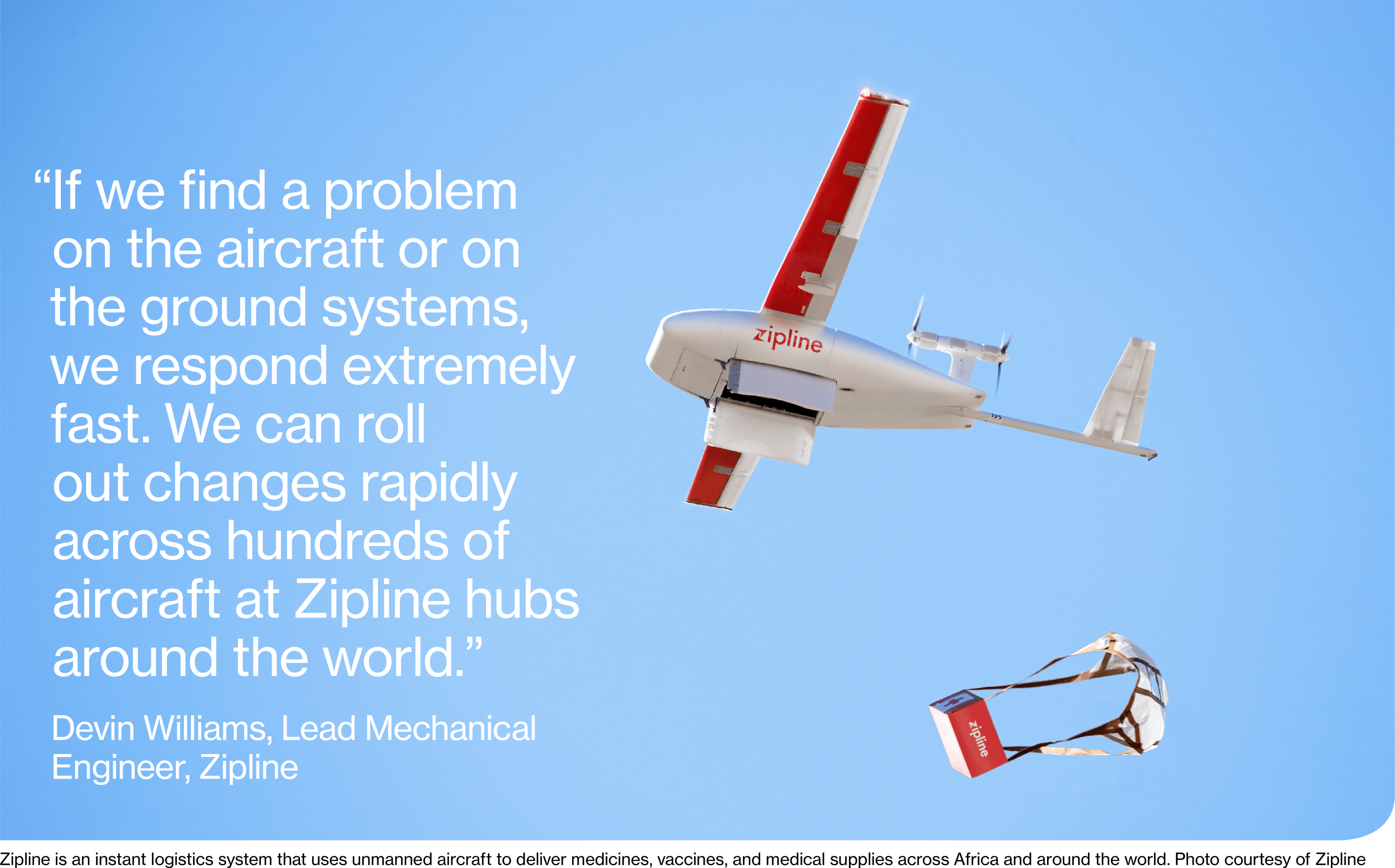
“Overall, the idea of focusing resources on a specific problem in sprints is something we take back from the software world to the hardware world,” says Devin Williams, mechanical engineer on the UAV production platform at Zipline. “Something we do really well is find the minimum viable product and then prove it in the field.”
Using an agile process allows Zipline to focus on releasing changes to the product that quickly meet customer needs while maintaining high reliability. The San Francisco Bay Area company currently has distribution centers in North Carolina and Arkansas, another is underway in Salt Lake City, and will soon launch in Japan and new markets in Africa.
Zipline is not alone. From startups to manufacturers with decades of history, companies are turning to agile design, development and manufacturing to create innovative products at lower costs. Aircraft maker Bye Aerospace has developed an electric airplane, cutting costs by more than half and speeding up the pace of its prototypes. Boeing used agile processes to win the TX dual-pilot training jet project with the US Air Force.
In general, implementing agile methodologies should be a priority for any manufacturer. For aerospace and defense companies whose complex projects typically follow the long-term horizon of waterfall development, agile design and development is needed to propel the industry into the era of urban air mobility and the future of space exploration.
The evolution of traditional product design
Although agile manufacturing has its origins in the Kanban method of just-in-time automobile production developed at Toyota in the 1940s, the modern agile framework for development was refined in the late 1990s by programmers seeking better ways to produce software. Agile development that focuses on creating a working product as early as possible, the minimum viable product, and then iterating the technology, rather than building a “waterfall” development pipeline that includes specific phases such as design and testing. A group of 17 developers in 2000 Prepared the Agile Manifestofocused on working software, individuals and interactions, and customer collaboration.
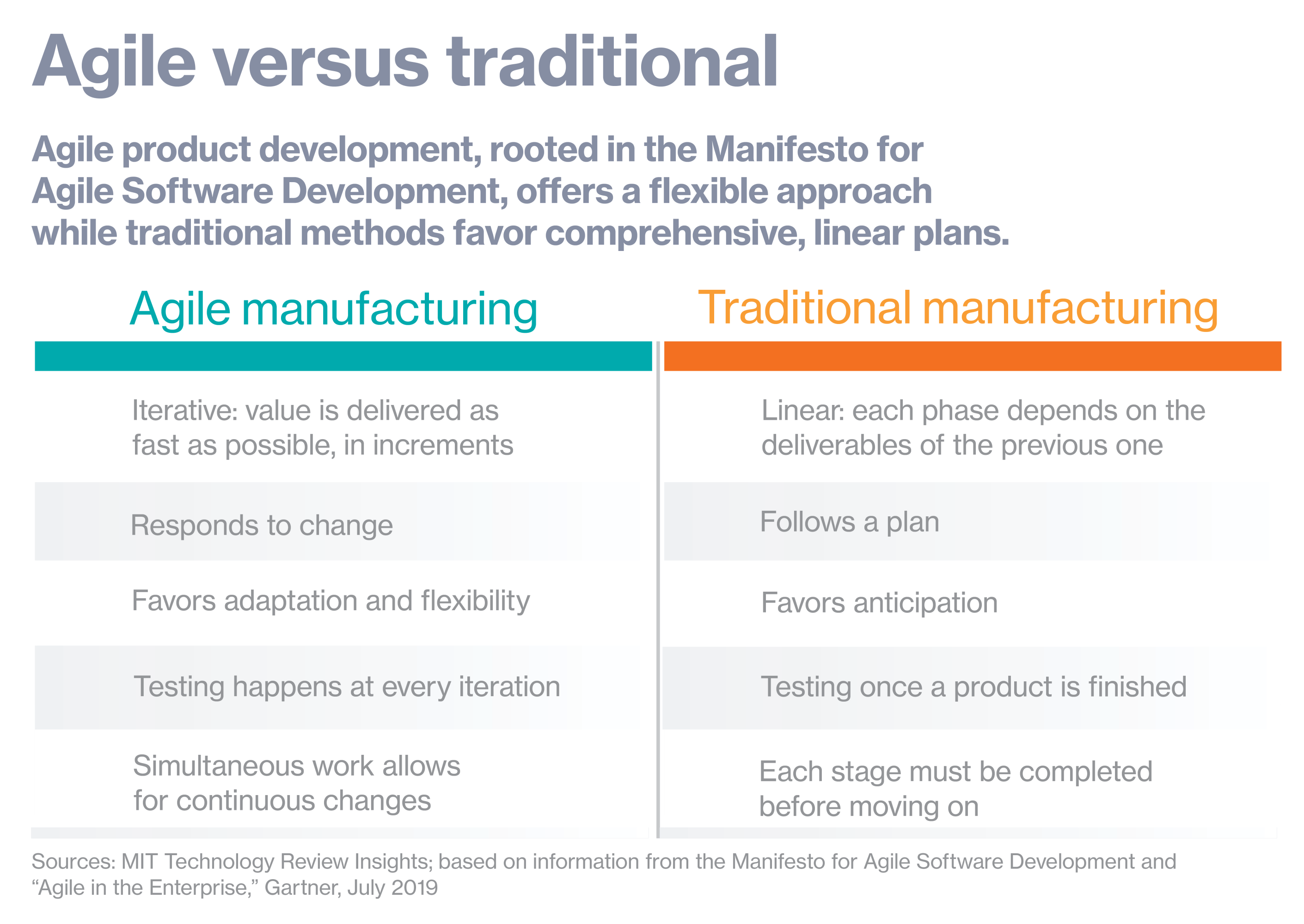
Over the past decade, agile software development has focused on DevOps—”development and operations”—creating interdisciplinary teams and culture for application development. Likewise, design companies and product manufacturers have learned the lessons of agility and reintegrated them into the manufacturing lifecycle. As a result, manufacturing now consists of small teams iterating over products, feeding real-world lessons back into the supply chain, and using software tools to accelerate collaboration.
Agile provides benefits in the aerospace and defense industry, which is known for the complexity of its products and systems. studies on the development TX two-seat jet trainerBoeing has committed to developing agile design and manufacturing processes that resulted in half the program cost for the US Air Force, a 75% increase in the quality of the first prototype, half the software development time, and an 80% reduction in assembly. time.
“We’ve taken an agile mindset and block-plan approach to hardware and software integration,” says Paul Niewald, Boeing’s TX program manager. “This allowed us to release software every eight weeks and test it at the system level to validate our requirements. Doing this in such a disciplined way – often – has allowed us to reduce our software work by 50%.”
Eventually, TX moved from design to building “production representative jets” within three years. This is a significant departure from the initial development of traditional aircraft programs that used waterfall enhancement during the initial design and development stages and may require ten years of development.
Download full report.
This content is produced by Insights, the exclusive content arm of MIT Technology Review. It was not written by the editorial staff of MIT Technology Review.
[ad_2]
Source link