

[ad_1]
Four months after the Afghan government fell to the Taliban, 22-year-old Assad Asadullah had become accustomed to a new routine.
In his hometown of Samangan province in northern Afghanistan, the former computer science student started and ended each day with his laptop glued to his screen.
Since the end of October, Asadullah has been attending a virtual coding bootcamp organized by Code Weekend, a volunteer community of Afghan tech enthusiasts, with content donated by Scrimba, a Norwegian company that offers online programming workshops.
Some days, Assad took a break from the screen for a pickup game, but usually he didn’t see much of his friends anymore. Under the Taliban regime, “old friends were getting very depressed,” he explains, and he had a lot to deal with. Instead he tells me “my life is on my computer”.
Assad is one of millions of young Afghans whose lives and future plans were turned upside down when the Taliban took back Afghanistan last August. By the time the capital fell, Esadullah had two semesters of college left and was contemplating his post-graduation plans. He was not picky about his first job; He would do anything that allowed him to save some money. But he had bigger plans: Asadullah wanted to start his own software company and share his love of computer science by teaching college and high school students. “When I start coding, I can forget everything,” he says.
Today, these plans stall, and no one knows how long. The country’s economy is in free fall, the United Nations warns of famine, and Afghanistan’s new rulers, meanwhile, have offered little solutions to their citizens.
In such dire conditions, a coding bootcamp, a remnant of a brief period of techno-optimism in Afghanistan, may seem out of place. It does, however, offer hope for a better future for its participants, but time will tell if such a future is still possible in Afghanistan.
virtual learning
When the Taliban came to power in August, it was unclear what their rule would mean for the Internet in Afghanistan. Will they cut off internet access? Use social media posts—or government databases— to identify and target old enemies? keep getting your own salary increasingly effective public relations campaigns?
As it turned out, the Taliban did not cut off access to the Internet – at least not yet. Instead, online learning has become one of the primary educational resources for Afghan students who can afford the Internet at home—particularly for women and girls, where the regime has officially banned secondary and higher education.
Some of these are well organized, encrypted virtual classrooms founded by international backers, while others are entirely self-directed – perhaps learning through YouTube videos or playlists of TED talks. And it usually falls somewhere in between taking advantage of free or discounted online learning platforms.
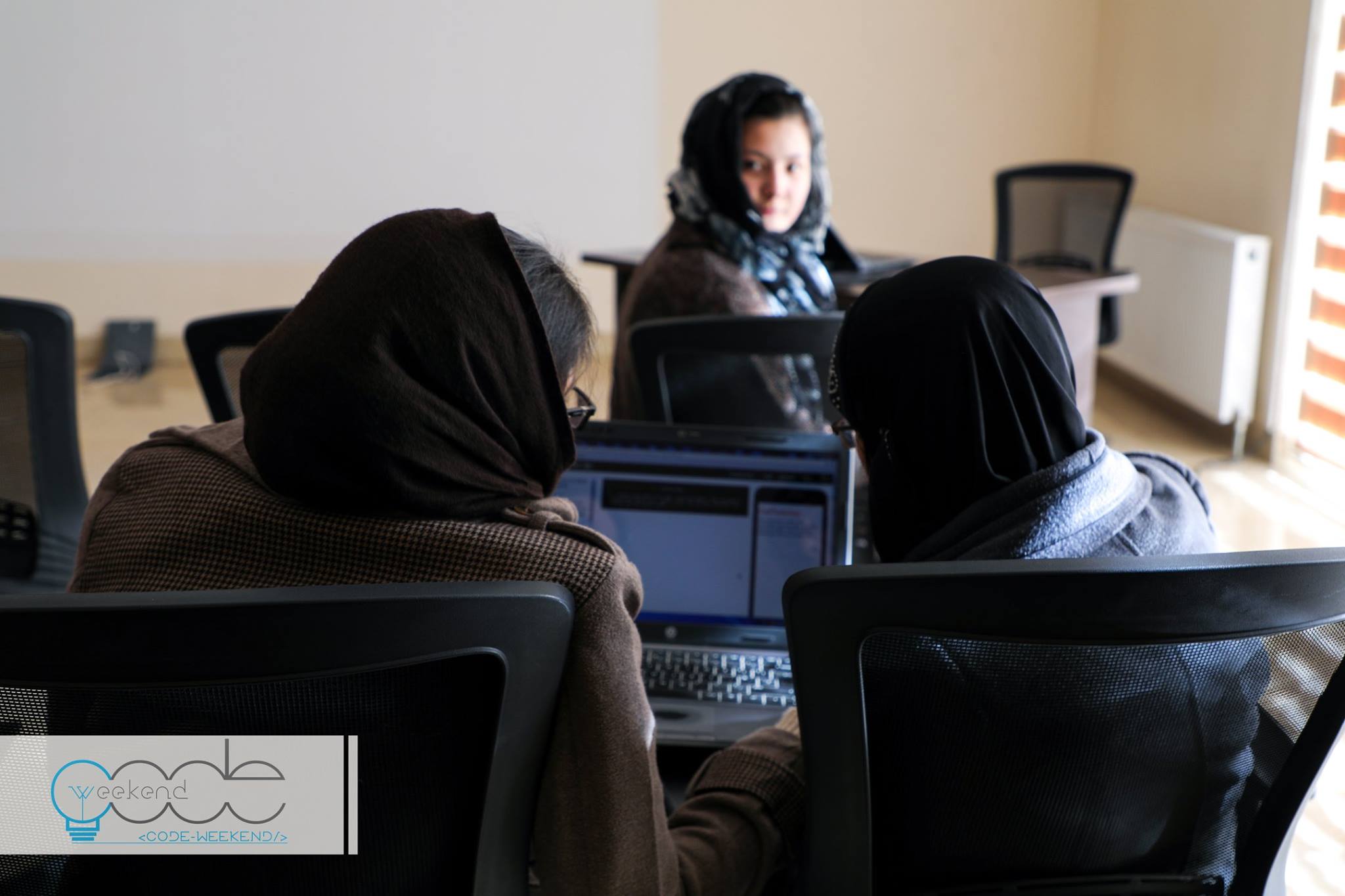
Code Weekend’s virtual bootcamp falls into this latter category. Seventy-five participants were accepted into the cohort and Scrimba’s Front End Developer Career PathA set of 13 interactive video learning modules that cover everything from the basics of HTML and CSS to tips for handling job interview questions on JavaScript or GitHub.
Participants can complete the modules in their own time and at their own home; Code Weekend volunteer advisors check in weekly to answer questions, keep them on track, and assist with logistics as needed – including providing Internet reinforcements to retain attendees. According to the organizers, about 50 members of the original group are active.
Providing internet connectivity is just one of the logistical and financial challenges of running a virtual bootcamp in Afghanistan. Another struggles with power outages that become more frequent each winter. In an attempt to solve both of these problems, Code Weekend was trying to crowdfund 3G credit and backup electricity costs through generators and battery storage units.
But there’s another issue that worries organizers: “What is the Taliban thinking,” says software engineer Jamshid Hashimi, who started Code Weekend with his friends seven years ago. The group doesn’t want to learn. “We’ve avoided interacting with them until now,” he says.
In a way, bootcamp’s virtual, asynchronous format helps Code Weekend stay under the radar. It makes it much easier for women, whose freedom of movement is greatly restricted under the Taliban’s extreme interpretation of Islam, to participate without leaving their homes or even interacting with male participants, which can provoke Taliban anger.
19-year-old Zarifa Sherzoy is one of the female participants of the training camp. A recent high school graduate had hoped to take college entrance exams and start college classes this term, but instead she and her seven siblings spend most of their days at home. Between chores, power outages, and limited access to the internet, he spends just an hour or two at coding bootcamp. But even that gave new structure and meaning to his days. “After the Taliban came,” he recalls, “he was very tired every day at home thinking about how to end this.” But since his coding bootcamp started at the end of October, he says “I have a good day,” although his problems have not disappeared.
The virtual format has another advantage: it allows coders outside the Afghan capital, such as Asad Asadullah, to participate.
Code Weekend Boot Camp
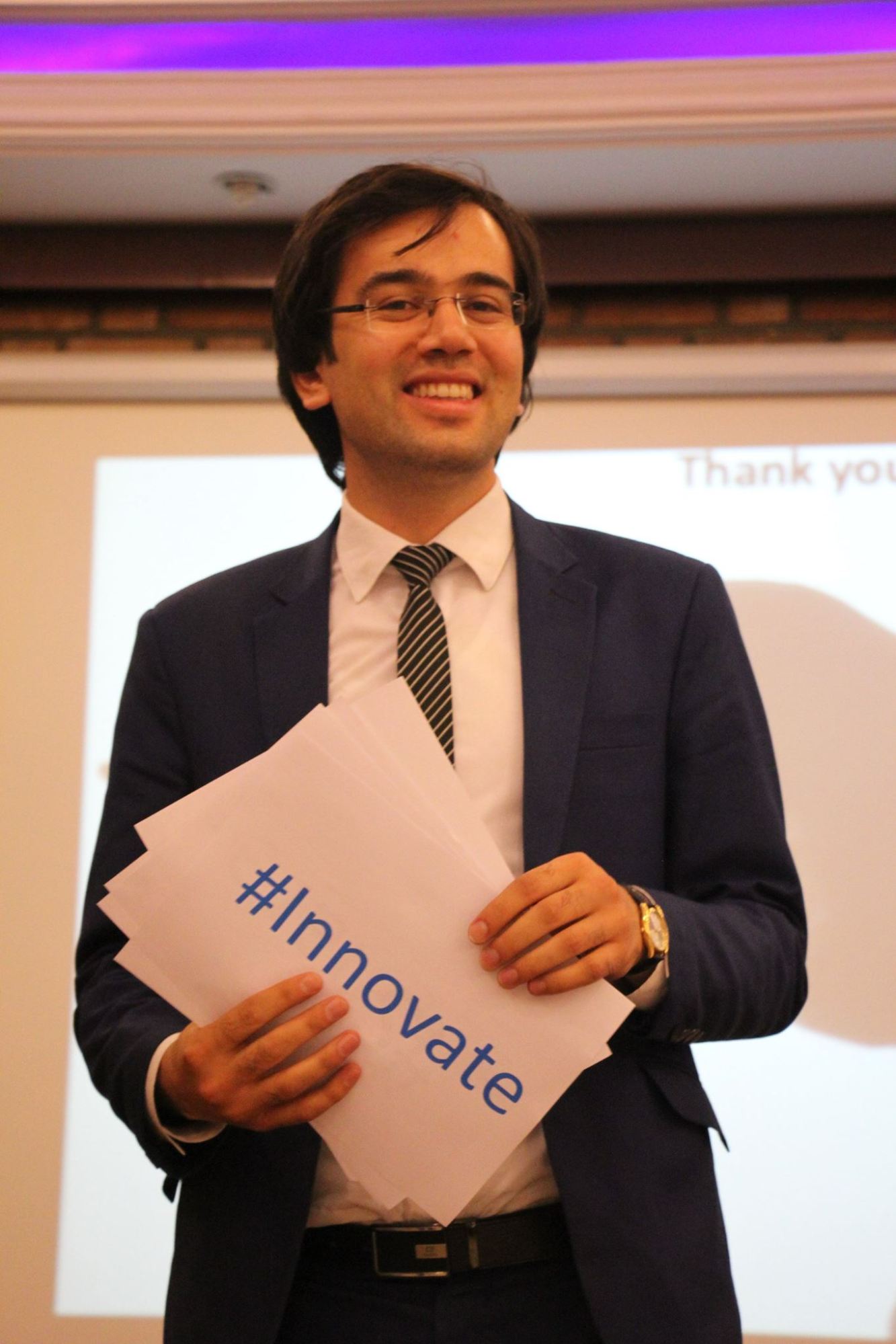
Jamshid Hashimi, then a 23-year-old software architect at local Afghan tech company Netlinks, was inspired by the techno-optimism that permeated Kabul at the time when he launched Code Weekend in June 2014 to bring Afghan programmers together.
A Fast Company profile on the country’s burgeoning startup scenePublished in 2012, he described the pervasive hope as: “Impossibly optimistic and utterly obsessed, Afghanistan’s so-called tech bosses believe computing will not only help them make money, but also secure peace on their soil.”
And it wasn’t just tech companies that were hopeful. Code Weekend was part of a series of initiatives aimed at fostering youth innovation, entrepreneurship, and ultimately participation and leadership in building a more progressive Afghanistan – some of which were funded by international donors with this clear purpose.
Other examples included the TEDxKabul program, which first came to Kabul in 2012 with its “ideas worth spreading” (TEDx slogan), and other entrepreneurship-focused global franchises such as the Founder Institute-Kabul, which ran from 2014 to 2017. Hashemi played a role in both of these programs, as did I at different times.) By 2016, even Google came to town and launched Google for Entrepreneurs, a community for startups.
But Code Weekend outlived all these attempts even after some of its leadership team, including Hashemi, left Afghanistan. Organized by volunteers, the group has held nearly 100 face-to-face meetings at universities, incubation centers and offices of leading Afghan technology companies in the seven years since its founding. During the pandemic, like the rest of the world, it’s real.
Attendees came together to learn everything from the fundamentals of WordPress design and JavaScript languages to data collection tools for the field. (Afghanistan’s charity economy had a strong interest in surveys and employed a large number of ICT workers.) They heard from local startups and engineering teams that came in to promote their new practice. They discussed books popular in the global tech community, such as Passionate Programmer (by Hashemi). And once, at an all-night event, open source enthusiasts gathered to release Laracon Online, the global conference for the open source Laravel web development framework.
Then, in 2019, after years of mostly weekend events, Code Weekend decided to take it even further: the group launched a face-to-face coding bootcamp. The first group was run through a pilot program of 15 developers, 12 of whom had graduated from the four-month program. According to Hashemi, several people found employment as a result of their participation.
Elyas Afghan, 24, hopes to become one of them after completing his training camp. Both of her brothers work in the field (one works for Hashimi’s company, Rapid Iteration), and partly as a result of their influence, he says, all he wants is to work with computers. More specifically, he hopes to find a job working for a global technology company.
After the successful pilot, Code Weekend organizers planned a second batch, but the coronavirus has slowed their efforts. Then, in late August of last year, the Afghan government collapsed – but that accelerated their plans rather than put an end to it.
“A lot of dreams were shattered when the government fell,” recalls Hashemi, who had moved to Vancouver, Canada at the time. Like many Afghans in the diaspora, he had a deep “urge to do something”. And he says his decision is to continue helping the way he knows best: to support Afghan coders. “People need hope,” he said, and hoped that a coding bootcamp would do the same, as previous events focused on technology or innovation provided that.
In our initial email correspondence, he wrote that Hashimi’s goal at the bootcamp was to “provide a more sustainable way for Afghan youth to learn new and market-driven skills,” and with those skills “to start generating an income for themselves and their families.” ”
For many bootcamp participants who all share these goals, the potential to study online may be their only option. 19-year-old Sherzoy is currently the only father working in his family, and the money he earns is not enough to support him and his six siblings. After bootcamp, he says he hopes to “help my family and do something for my future.” “I don’t want to be illiterate,” he adds. [uneducated]”

But so far, most of the revenue opportunities come from Hashimi’s other efforts: In addition to Code Weekend, he also runs a software development company that employs or contracts with more than 20 Afghan programmers, many of whom are still in Afghanistan. aspect online freelance platform, Yagan Kar (which means “some work” in Dari), for Afghan freelancers.
This is an adaptation of his original, pre-Taliban plans. Even after Hashemi left Afghanistan in 2016 to pursue a master’s in innovation management in the UK, he would spend three or four months in his home country each year supporting the burgeoning tech community. “My dream,” he says, “is to own the biggest software house in Afghanistan”.
In a way, that’s still his goal. “I want to bring in 1,000 jobs from abroad by 2023,” he says, “which will help many freelancers, young people and developers, as well as the economy.”
“All Afghans want to leave,” he says, but the reality is that the vast majority of them are not suitable for resettlement and evacuation efforts. They will stay in Afghanistan and they will need new sources of income. Hashimi sees the international tech community as a potential provider of this income, both remotely and through freelance work.
But all this will take time, and the country faces more pressing challenges.
[ad_2]
Source link