

[ad_1]
Nations are poised to begin building an international carbon market, after finally adopting the relevant rules at the UN climate conference in Glasgow earlier this month.
Under the COP26 agreement, countries will soon be able to buy and sell UN-certified carbon credits from each other and use them as a way to meet their greenhouse gas reduction commitments under the Paris climate agreement.
But some observers fear that the rules contain large loopholes that could make it appear as if nations are making more progress on emissions than they really are. Others warn that the deal could accelerate the creation of carbon credits in separate voluntary offset markets, which are often criticized for exaggerating climate benefits.
Carbon credits, or offsets, are generated from projects that claim to either prevent a ton of carbon dioxide emissions or pull the same amount out of the atmosphere. They are often awarded for practices such as stopping deforestation, planting trees, and adopting certain soil management techniques.
A new supervisory body, which should begin holding meetings next year, will develop final methods for verifying, monitoring and approving projects aimed at selling UN-accredited carbon credits. The Glasgow agreement will create a separate process for countries to earn credit towards the Paris targets by collaborating with other countries on projects that reduce climate emissions, such as financing renewable power plants in another country.
Experts disagree on how much the UN-backed market will grow, what some of the new rules will actually do, and how much details may change as final methods are determined. But Jessica Green, associate professor of political science at the University of Toronto, who focuses on climate governance and climate management, says the process is “slowly, disorganizedly, slowly building the infrastructure for more carbon trading as a commodity.” carbon markets.
The US and the European Union have indicated that they do not intend to rely on carbon credits to meet their emissions targets under the Paris agreement. However, countries such as Canada, Japan, New Zealand, Norway, South Korea and Switzerland have said they will apply carbon credits. by virtue of To Carbon Brief. Actually, Switzerland already funding projects In Peru, Ghana and Thailand in hopes of counting these initiatives towards the Paris goal.
Most observers praise At least one major achievement in Glasgow: Rules will largely prevent duplication of climate progress. This means that the two countries trading carbon credits will not be able to apply their climate gains towards the Paris targets. Only the country that buys a credit or holds the credit it produces can do so.
voluntary markets
But some experts fear there may still be ways in which double counting can occur.
Offset project developers have long been able to generate and sell carbon credits through voluntary programs. managed by records Like Verra or Gold Standard. Oil and gas companies, airlines, and tech giants are buying an increasing number of offsets through such programs as they strive to meet net-zero emissions targets.
Danny Cullenward, policy director at CarbonPlan, a nonprofit that analyzes the integrity of carbon removal efforts, says the UN’s new rules take a non-intrusive approach to these markets.
This indicates, for example, that project developers in Brazil can earn money for offsets sold through voluntary markets, while the nation itself can apply these carbon gains to its own emissions progress under the Paris agreements. Cullenward says this means that there can still be a double count between a country and a company that claims the same loans are reducing their emissions.
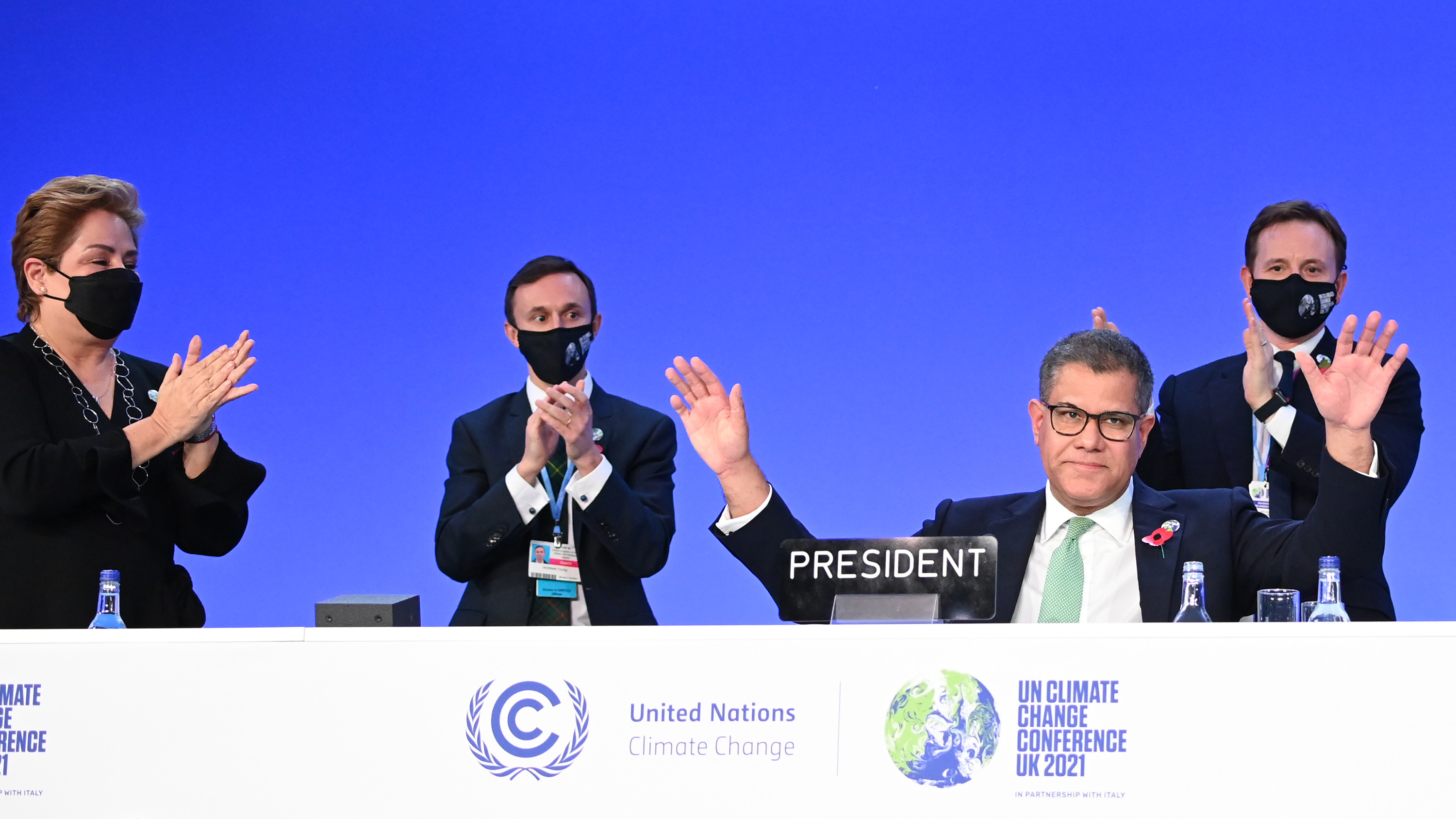
JEFF J MITCHELL/GETTY IMAGES
An additional problem is that studies and research stories They found that voluntary offset programs can overstate the levels of carbon dioxide that is reduced or removed due to various accounting issues. But the fact that the UN will not regulate these programs may provide market clarity, which encourages greater demand for these offsets and encourages the development of more projects with questionable climate benefits.
“This is a complete green light for continued scaling of markets,” Cullenward says.
Some observers think that many countries would prefer not to apply loans sold in voluntary markets to Paris destinations. Likewise, some markets will probably distinguish Labeling loans and pricing them accordingly to indicate their relative quality between loans that countries do and do not use in this way.
“I expected this as the recognition increased [corresponding adjustments] It is necessary to ensure the environmental integrity of voluntary offset claims, then the market will move in that direction,” Matthew Brander, senior lecturer in carbon accounting at Edinburgh University Business School, wrote in an email.
Inconsistent accounting
Lambert Schneider, international climate policy research coordinator at the Oeko-Institut in Germany, pointed to another “big gap”. an analysis last month.
Schneider, who was part of the European Union’s team that negotiated carbon market rules, noted that the rules allow different countries to use different accounting methods for carbon credits produced and sold at different times. This can lead to double counting. In one scenario he has outlined, half of the emissions reductions from a series of carbon credits could be claimed by two countries.
If all nations always use the same method, the results from both accounting methods may more or less balance over time. But instead, each country may choose the most useful method each time it reports progress, possibly breaking the overall carbon math.
“It’s a cherry picking issue,” Schneider says.
Doubtful climate benefits
Another area of concern is that the rules allow them to apply some loans from an earlier UN program known as the Clean Development Mechanism, which was mandated under the Kyoto Protocol that went into effect in 2005.
This system has issued Certified Emission Reductions to countries that fund clean energy projects in other countries, such as solar and wind farms, for emissions they may have avoided. It was designed to create an incentive for wealthier nations. to finance sustainable development in the poorer. They constantly generate credits on the assumption that otherwise the electricity will be produced by a climate polluting plant, such as a coal or natural gas power plant.
Under rules approved in Glasgow, countries can continue to apply credits towards initial emissions reduction targets (which in most cases means for 2030) from such projects registered in 2013 or later.
[ad_2]
Source link