

[ad_1]
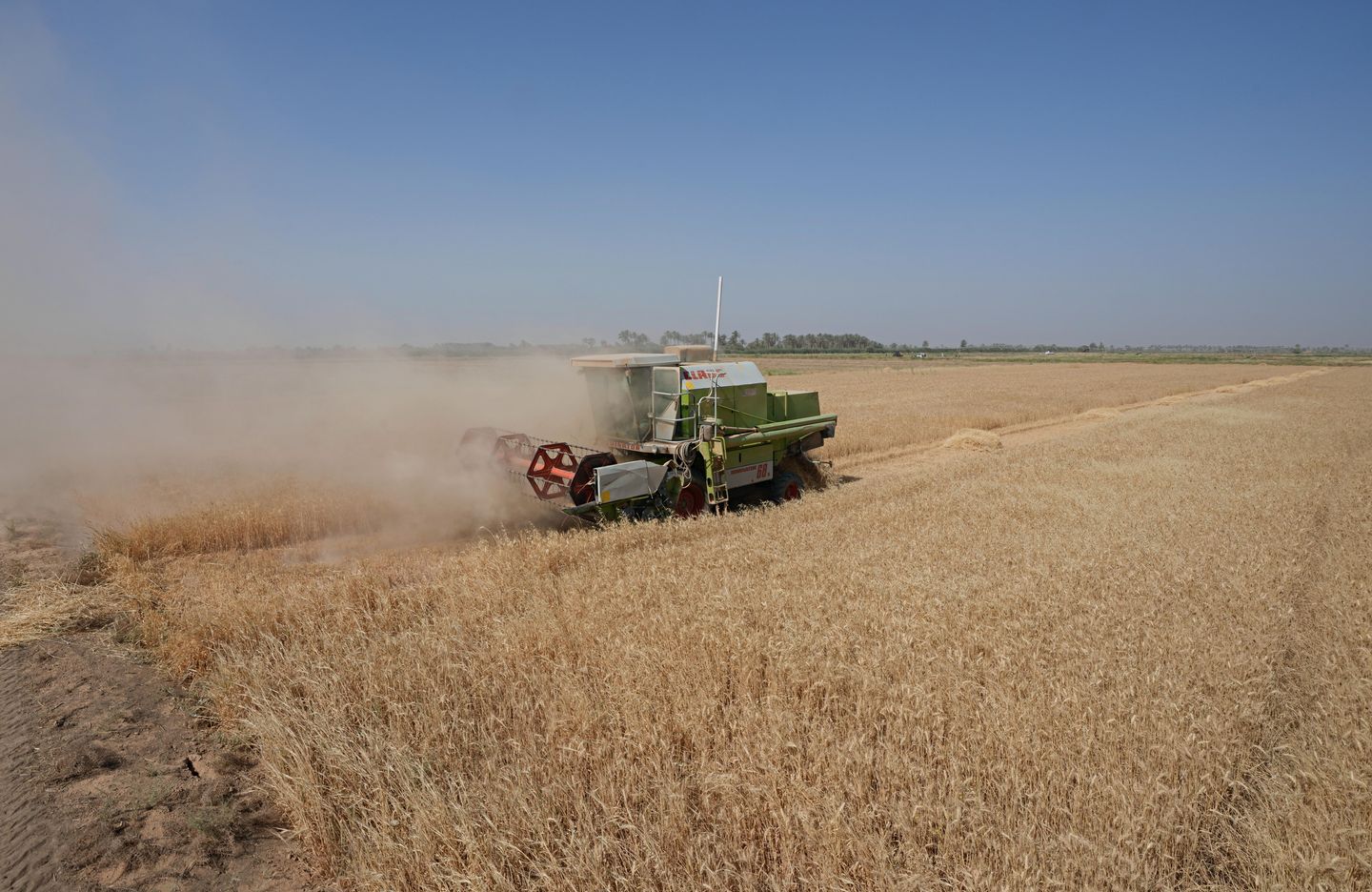
BAGHDAD – Salah Chelab crushed a wheat husk plucked from a large farmland south of Baghdad and examined the seeds in his palm. They were a few grams lighter than he had hoped.
“It’s because of the water shortage,” he said as the farm machinery roared behind him as he cut through the year’s wheat harvest.
Chelab had planted most of its 10-acre (4-hectare) land, but said it was only able to irrigate a quarter after the Department of Agriculture introduced strict water quotas during the growing season. In the rest, he fears the crop he grows will “die without water.”
At a time when wheat prices are rising worldwide due to the Russian invasion of Ukraine, Iraqi farmers are paying the price for the government’s decision to reduce irrigation of their farmland by 50%.
The government took action in the face of severe water shortages from high temperatures and drought, believed to be fueled by climate change, and neighboring countries’ continued withdrawal of water from the Tigris and Euphrates rivers. All these factors put a great strain on wheat production.
Struggling with water shortages, the Iraqi government has failed to solve other long-neglected problems.
Desertification has been blamed as a factor behind this year’s relentless sandstorm. At least 10 have hit the country in the last few months, covering cities with a thick blanket of orange dust, stopping flights and sending thousands to hospitals.
“We need water to solve the desertification problem, but we also need water to secure our food supplies,” said Essa Fayadh, a senior official at the Ministry of Environment. “We can’t afford both.”
Iraq meets almost all of its water needs from the Tigris and Euphrates rivers. Both flow into Iraq from Turkey and Iran. These countries created major famines in Iraq by building dams that blocked or diverted water.
Water Resources Minister Mehdi Rasheed told The Associated Press that river levels have dropped 60% from last year.
For Chelab, less water meant smaller grain size and lower crop yields.
Chelab produced 30,000 tons of wheat in 2021, 32,000 the year before that, receipts from Commerce Department silos show. He expects no more than 10,000 this year.
Its crops are both fed by rain and irrigated through a canal from the Euphrates. He said that because of the low rainfall levels, he had to rely on river water during the growing season.
Government officials say change is necessary.
The current system has been inefficient and unsustainable for decades. Water scarcity leaves them no choice but to modernize their outdated and wasteful farming techniques.
“We have a strategic plan to face drought, taking into account the scarcity of rain, global warming and the lack of irrigation from neighboring countries because we are not getting our share of water rights,” said Hamid al-Naif, spokesperson of the Ministry of Agriculture. .
The ministry took measures to design new drought-resistant wheat varieties and develop methods to increase crop yields.
“We’re still dealing with the irrigation systems of the 1950s. “It has nothing to do with the farmer,” he said. “The state must make it efficient, we must force the farmer to accept it.”
Iraqi farmers have historically been heavily dependent on the state for food production, a trust that policymakers and experts say is depleting government funds.
The Department of Agriculture supports farmers by providing them with subsidized or free supply of everything from harvesting tools, seeds, fertilizers and pesticides. Water diverted from rivers for irrigation is provided free of charge. The Department of Commerce then stores or buys the farmers’ produce and distributes it to the markets.
Wheat is an important strategic product that accounts for 70% of the total grain production in the country.
Planting begins in October and harvest typically begins in April and extends into June in some areas. Last year, the Department of Agriculture cut subsidies for fertilizers, seeds and pesticides, a move that has angered farmers.
Local demand for basic raw materials is between 5-6 million tons per year. However, local production is getting smaller every year. According to the Ministry of Agriculture, Iraq produced 4.2 million tons of wheat in 2021. It was 6.2 million tons in 2020.
“Today, at best, we can buy 2.5 million tons,” said Al-Naif. This will require Iraq to increase imports.
Most of the wheat harvest is usually sold to the Department of Commerce. Al-Naif said that as a sign of the low harvest, there are currently only 373,000 tons of wheat in the warehouses of the Ministry of Commerce.
To meet demand amid the recent global crisis in the grain market, the government recently changed a policy that allows all Iraqi farmers to sell their produce to the Commerce Ministry silos. Previously, this was limited to farmers operating within the government plan.
Back at Chelab’s farm, the wheat is ready to be transported to the silo.
“It is true that we need to improve ourselves,” he said. But the change should be gradual, not immediate.”
[ad_2]
Source link